
Most families have boxes of photos and no real plan for them. There are albums tucked into closets and old videos on hard drives. Stories come up at holidays and then disappear again, with everyone hoping that someone turned on their smartphone to record. This is how we care for most of our memories. The task of going through artifacts can cause a lot of stress for first and next generation family members, and we know Millennials and Gen Z think about this too. The anxiety you might be feeling is normal and could be the impetus to get something done.
That’s where we come in. A Sacred Stories Legacy Film is a professionally produced, interview-based film that preserves a loved one’s voice, stories, memories, values, and wisdom for future generations. And there’s no time like now to get started. We have developed a simple process that is structured, thoughtful, and approachable.
A few helpful terms to note as you read on:
- Legacy Film – a cinematic production experience to capture and preserve life stories
- Client – the person who hires Sacred Stories Legacy Films
- Storyteller(s) – the person telling their life stories. It might be a single person, a couple, a parent, an uncle, an aunt, a grandparent, a matriarch, a patriarch, a founder, or a boss. It might be you.
If you’re wondering how a legacy film is made, the process is more than simply sitting down in front of a camera. A thoughtfully created family legacy film brings together guided interviews, photographs, meaningful memories, and careful editing to preserve a person’s story for generations. Here’s what you can expect from the Sacred Stories Legacy Film process.
Here are the steps for a Sacred Stories Legacy Film:
1. Start With a Conversation About Your Legacy Film – We are excited to discuss your project with you once you book a discovery call.
- Introductory call to learn about the person or family
- Discuss goals for the film (family history, number of people, milestone birthday, anniversary, etc.)
- Share with us how the film might be used or enjoyed
- Discuss possible dates and timeline for production
2. Complete Your Legacy Film Questionnaire – We want to hear more about you and your project goals.
- Tell us about the person we’ll be filming – name and a little history
- Make selections about production specifics
- Share topics that feel especially meaningful to include
- Note any areas that should be approached with care
- Client consents to the payment and delivery structure
3. Choose Your Legacy Film Production Day – We want to make sure the interview session is unhurried and comfortable for our storyteller and everyone involved.
- Decide on a location (usually the storyteller’s home, client’s home, or another meaningful place)
- Schedule the filming day. Interviews typically last from 3-6 hours, with appropriate breaks. The process is relaxed and conversational
- Discuss who will be present and the logistics of the day
- Talk about the tone of the conversation and answer client or storyteller questions
4. Gather Photos & Family Treasures – We want to incorporate special assets and artifacts into your film.
Families love this part and are so grateful to get this done. The photos of your life enhance the film. During this phase, you will begin collecting:
- Photographs (these are critical to developing a cinematic film)
- Optional home videos and other artifacts
Photos we love: Childhood, Wedding, Early career moments, Family gatherings, Generational photos
We request that photos be submitted on or before the interview day. You can upload to a shared folder, or we can assist with scanning and digitizing. We will work with what you have. Your labels (people, places, and dates) certainly assist with the process.
5. Preparing for the Interview – We will review your background information and develop our questions and structure for the day.
- The storyteller chooses a comfortable outfit
- The storyteller thinks about the people and moments that shaped his or her life
- Sacred Stories staff curates our questions and outline for the interview session.
6. The Legacy Film Interview Day – We create a calm environment where stories can unfold naturally.
What typically happens:
- Professional lighting and cameras set up (approx 1 hour)
- Guided conversation in a setting that feels natural and calm
- Time for laughter and reflection.
Interview topics might include:
- Childhood
- Family traditions
- Turning points in life
- Lessons learned
- Hopes for future generations
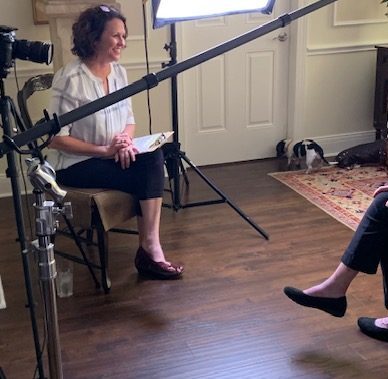
We might also capture lifestyle footage at the direction of the family (favorite instrument, outdoor recreation, board games, and more).
7. The Story Comes Together – We listen closely for the defining themes of your life and thoughtfully shape them into a cinematic masterpiece.
We spend several weeks in post-production. We will…
- Review and catalog the hours of interview footage
- Develop a structure for the film based on the information you provided and our expertise in creating meaningful flow and beautiful films.
- Weave in family photos and video clips
- Enhance the film’s depth and pacing with music, appropriate transitions, and artful chapter breaks.
Your life stories are becoming a film. The result is not a chronological record, but a carefully constructed narrative. Your film reflects both the facts and the emotional truth of a life lived.
8. The First Viewing – We present your film for an initial screening.
This is a favorite moment for our team at Sacred Stories. This is when your project is enjoyed, and you see a reflection of who you are and of the moments and memories that have shaped your life. The client will receive the film via private digital delivery. There is time for revisions and feedback, and you can decide when and how this is shared with the storyteller and others.
9. A Film for Generations – We deliver a beautifully finished Legacy Film designed to be preserved, shared, and passed down. This is your story, captured with care and created to endure.
Legacy films can:
- Preserve a life story
- Help future generations gain resilience as they learn about their roots
- Capture family values and wisdom
- Become a treasured family archive
It is something families have told us they return to during milestones, transitions, and moments of reflection. Over time, its value often deepens, offering future generations not just information, but connection.
There are a few things I hear again and again:
- “It felt so natural.”
- “That went by so quickly.”
- “I didn’t expect to enjoy it this much.”
- “I’m so glad we did this now.”
The process is simpler (and more meaningful) than people expect. The stories that shape a family are too important to leave to memory alone. A Legacy Film captures important voices, moments, and memories so they can gain new meaning and be shared for generations.
For further Reading:
- Basic FAQs – sacredstoriesfilms.com/legacy-film
- More FAQs – sacredstoriesfilms.com/more-faqs
- Photos – When selecting photos for your Legacy Film, choose images that help tell the story of a life from beginning to present. Start with childhood: early years, family homes, school photos, and formative moments. Include major milestones such as graduations, marriage, and the start of a family. Add photos that highlight everyday moments. Be sure to gather photos of important relationships – parents, grandparents, siblings, and close friends. We also recommend including photos of places and settings that will come up in your stories, as well as any historical images that add context. Don’t be too concerned about the photos. We will guide you through this part of the project, and it might encourage you to begin a more complex photo organization project down the road.
- How to Approach Your Loved One About a Legacy Film
- The Power of Family Legacy Videos by Advisory Group Member Ryan Anderson
- What’s included in the cost of a legacy film? sacredstoriesfilms.com/value
- Client Testimonials
If you’ve ever thought, “We should really do something with all of this someday…” This is someday.
You don’t need every photo organized or every story perfectly remembered. A Legacy Film provides structure and a wonderful way to respond to that persistent feeling that this is important. A Legacy Film gives your family stories a lasting form, preserving the voices, memories, values, and wisdom that families want future generations to know. A Sacred Stories Legacy Film turns intention into something tangible, lasting, and deeply meaningful.
You just need to begin, and we’re here to help you get started. Start with #1 — Let’s have a conversation. And we’ll be here for every other step along the way.
In addition to family films, we partner with foundations, corporations, nonprofit organizations, and family offices to create a variety of legacy projects. Each is thoughtfully shaped by its particular goals, stakeholders, and scope. The process outlined here speaks most directly to our projects with families, but reflects the intentionality, expertise, and rhythms that define the full breadth of our work.