
If I could spend just ten more minutes with my mother, I know exactly what I’d do. I’d sit in her kitchen while she cooked dinner. Maybe she’d be making the roast chicken I loved so much, with mashed potatoes that were just lumpy enough. Her house would be warm and filled with plants, the dog would be nearby, and we’d talk about anything and everything. Or perhaps we’d say nothing at all.
We were good at that, my mother and I. We could talk for hours, but we could also sit together in comfortable silence. There was never any pressure to entertain each other or fill the space. We simply loved being together.
It’s been many years since my mother died, and what I miss most isn’t necessarily the big occasions or milestones we shared. It’s those unremarkable afternoons, the everyday conversations, the feeling of being completely at ease with someone who knew me inside and out, loved me without reservation, and believed in me more than I sometimes believed in myself.
And while I can’t have those ten minutes with her again, I’ve discovered that I can do something else: I can visit with her in my memories.
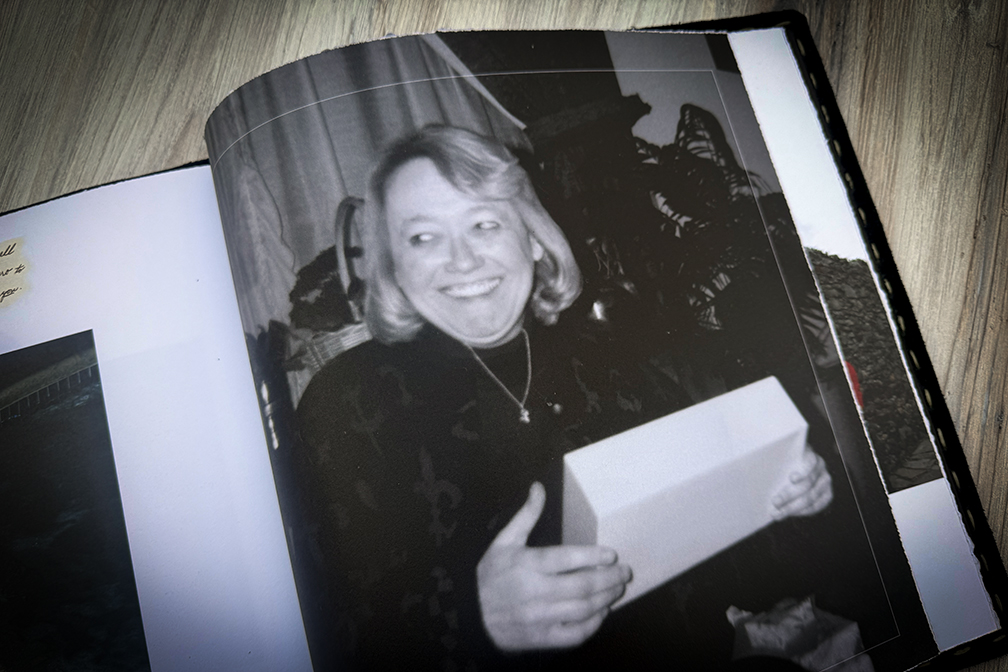
The Little Things That Bring Someone Back
My mother had an extraordinary laugh. It came from somewhere deep within her, completely uninhibited and wonderfully contagious. And it didn’t always arrive at the most opportune moments. Sometimes she’d start laughing at a fast-food drive-through because she couldn’t understand the person speaking through the crackly intercom. She’d turn to me in the passenger seat, still laughing, and make me order.
That scene I’d love to return to? I can picture her standing at the kitchen sink, wearing an apron, turning over her shoulder to laugh at something I’d said. I remember how her whole face lit up.
I also remember her hands. She had a habit of cracking her knuckles or drumming her fingers on the steering wheel while listening to music. Sometimes I catch myself doing the same thing, and suddenly I can picture her hands so clearly—the shape of her fingers, her unadorned nails, often bitten to the quick, even the skin of her wrists—that I almost feel I could reach out and touch her.
These aren’t the sorts of details that typically appear in a biography. They aren’t accomplishments, defining life events, or lessons she intentionally passed down. But they are unmistakably her.
And when I allow myself to linger with these memories, even for a moment, I feel a little closer to my mother.
Remembering isn’t always the same as preserving
As the founder of Modern Heirloom Books, I spend my professional life helping families preserve personal histories. I believe deeply in the importance of recording stories and creating something tangible that future generations can treasure.
In fact, about a year after my mother died, I created a tribute book in her honor. It remains one of my most meaningful possessions.
But over the years, I’ve come to appreciate an important distinction between preserving memories and remembering. Preservation is, in many ways, an act of looking toward the future. We gather stories, images, and recollections so that something of the people we love will endure beyond our own lifetimes—even allowing future generations who never met them to know them a little. But remembering isn’t always about the future. Sometimes it’s simply about wanting to spend a little time with someone we miss.
We don’t always need to write something down, organize a photograph collection, or create a permanent record. Sometimes we can simply give ourselves permission to revisit a memory for the pleasure, comfort, or companionship it offers us right now.
A book, photograph, or recording can be a wonderful doorway into that experience. But so can a song on the radio, the scent of a familiar meal, or a quiet moment on an afternoon walk. And sometimes we don’t need a doorway at all. We can simply close our eyes and remember.
Making Room for the Memories
For a long time after my mother’s death, remembering could be painful. I sometimes protected myself from memories that threatened to bring on an overwhelming sense of loss, but that has changed over the years.
The sadness hasn’t disappeared; it has become a quieter, more constant part of who I am. But now, when I revisit memories of my mother, I often feel something closer to companionship than grief alone.
Sometimes those visits happen unexpectedly. When I hear the wind chimes hanging outside my house, I think of my mother, who loved their sound. Actually, think isn’t quite the right word—it’s more like a feeling that comes over me before I’ve even formed a conscious thought. For a moment, she’s there.
Other times, I seek her out. I make her spinach quiche from the handwritten recipe card I still have. Or I find myself wondering what she’d say about my son’s college search, remembering how enthusiastically she accompanied me on my own. Oh, what I wouldn’t give to see her as a grandmother!
And yet other times, I need only tune in to her love and encouragement that I carry with me still—it’s always there, if only I pay attention.
An Invitation to Visit with Someone You Miss
We often think about remembrance as something we do on particular occasions: birthdays, anniversaries, holidays, or gatherings with family and friends. But why should we limit ourselves to those moments? What if we made a little space in our ordinary lives to visit with someone we’ve lost, much as we might make time to visit a living friend?
It doesn’t have to be elaborate or even particularly emotional. And it certainly doesn’t need to become another project.
You might begin with a few simple questions:
- Where would you most like to spend ten ordinary minutes with this person? Picture the setting, the sounds, and the things you’d be doing together.
- What little habit or mannerism was so distinctly theirs? Think beyond the big stories to the details you can still see or hear.
- What everyday experience brings this person to mind? A particular food, a familiar song, a place you pass regularly?
- What would you enjoy telling them about your life today? Imagine the conversation, not to dwell on what you’ve lost, but to remember the relationship you shared.
You don’t have to answer every question. You don’t have to write anything down. And you don’t have to turn the experience into something profound. Just allow yourself a little time in the company of your memories.
I know that for some people, revisiting memories may still feel too painful. I felt that way myself for a long time. But I’ve come to appreciate that remembering can give us something beyond the reassurance that a loved one’s story hasn’t been forgotten. It can give us a way to continue our relationship with them.
I’ve spent much of my professional life helping people preserve their family stories, and I believe deeply in the importance of that work. But some of my most treasured moments with my mother exist only in my memory. I don’t need to record them or share them with anyone. I can simply return to them when I want to feel close to her.
I can’t sit in my mother’s kitchen again or pick up the phone to tell her about my day. But I can picture her standing at the sink, turning toward me with that wonderful laugh. I can remember how it felt to be there, with nowhere else we needed to be.
Sometimes I just want to spend a little time with my mom. And in my memories, I still can.
Dawn M. Roode is the founder of Modern Heirloom Books, where she helps individuals and families preserve their personal histories in beautifully written and designed heirloom books. She is also the creator of two companion books designed to inspire meaningful conversations and deeper connections. Dawn is a part of the Sacred Stories Advisory Group.